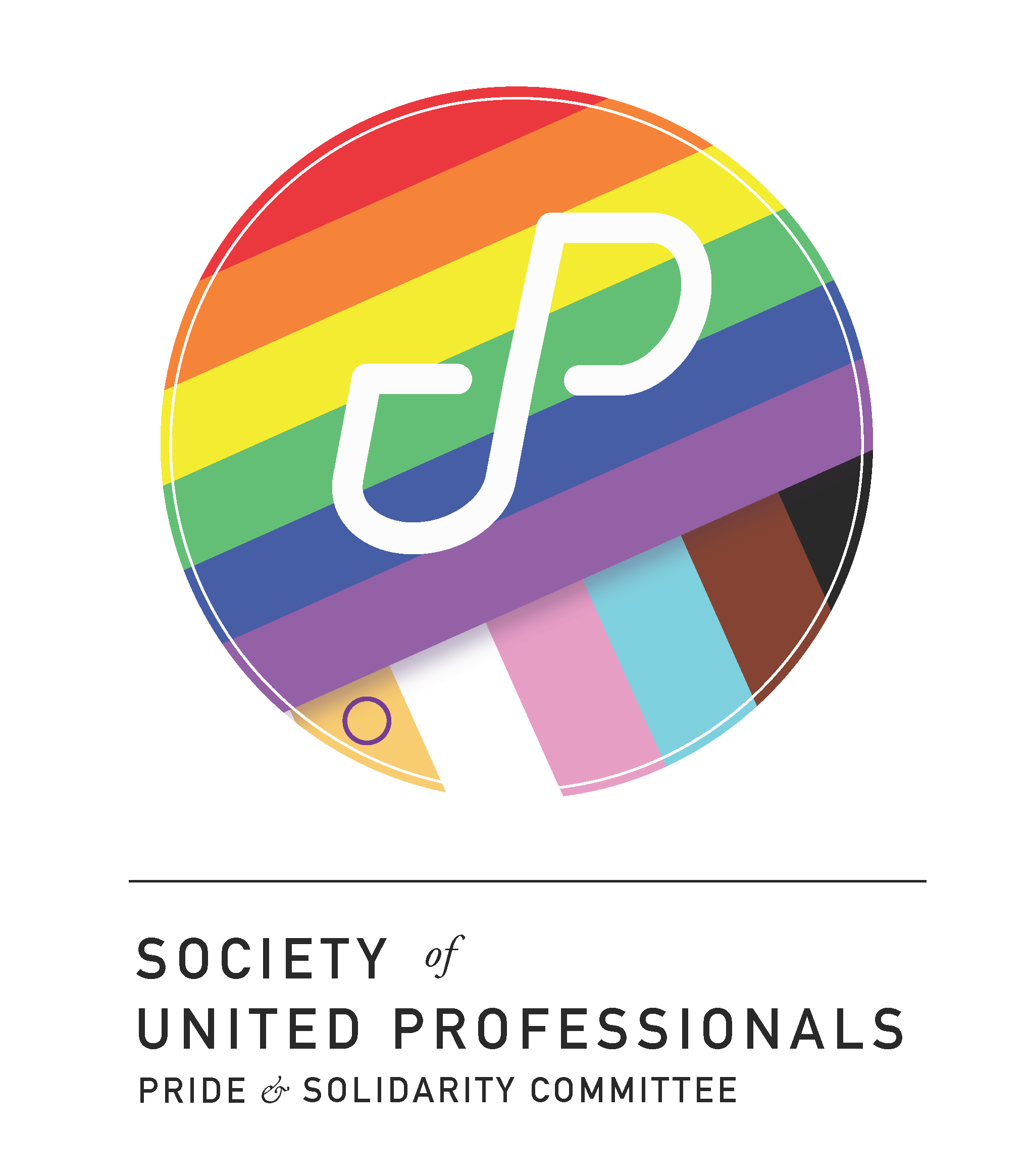
Just in time for Pride Season, the Society Pride and Solidarity Committee has unveiled a new logo! The logo features the traditional red to violet rainbow, with some new colours and symbols added to recognize the diverse identities within the 2SLGBTQI+ community. But what do the colours mean? And how has the pride flag evolved over time?
The first pride flag was developed by gay activist Gilbert Baker in the 1970s, and featured hot pink and turquois in addition to red, orange, yellow, green, indigo, and violet. Hot pink, which represented sexuality, was removed from the flag because the fabric was difficult to find. The turquois was removed as a design choice. Thus, the flag was eventually simplified to six colours. These each have a particular meaning:
Red signifies life, perhaps due to its connection to blood. Orange represents healing. Yellow represents sunlight. Green signifies nature. Indigo signifies serenity. And violent represents spirit.
Over time, new flags to represent different groups within the 2SLGBTQI+ rainbow were developed, including the transgender, bisexual, and pansexual pride flags.
The Pride and Solidarity Committee’s logo is inspired what has been termed the New Progress Pride Flag, created by Daniel Quasar in 2018.
The New Progress Pride Flag incorporates the trans flag, which features pink (representing trans women), baby blue (representing trans men), and white (representing non-binary and transitioning people). The trans flag was created in 1999 by trans activist Monica Helms, which was introduced in the Pheonix Pride Parade in 2000.
The New Progress Pride Flag also incorporates the Intersex Flag, which is a golden yellow background with a purple circle emblem. According to flag creator Morgan Carpenter, “the circle is unbroken and unornamented, symbolising wholeness and completeness, and our potentialities. We are still fighting for bodily autonomy and genital integrity, and this symbolises the right to be who and how we want to be.”
The New Progress Pride Flag also features a black and brown stripe, which symbolize members of the 2SLGBTQI+ community who are Black and people of colour. These colours are an important addition to the pride flag because they acknowledge the historic and ongoing contributions of Black and racialized people to the struggle for 2SLGBTQI+ rights – contributions that have historically been downplayed, erased, or ignored. Black trans activists like Marsha P. Johnson, who participated in the movement-defining Stonewall riots in 1969, are receiving growing recognition for their parts in history. The black and brown stripes also bring attention to racism and the intersecting experiences of Black and racialized queer people.
The Pride and Solidarity Committee’s new logo seeks to lift up those diverse identities that form part of the 2SLGBTQIA+ community. We are excited to share it with you.
If you would like to learn more about the Pride and Solidarity Committee, if you’d like to join our mailing list, or if you’d like to get involved, please email [email protected].